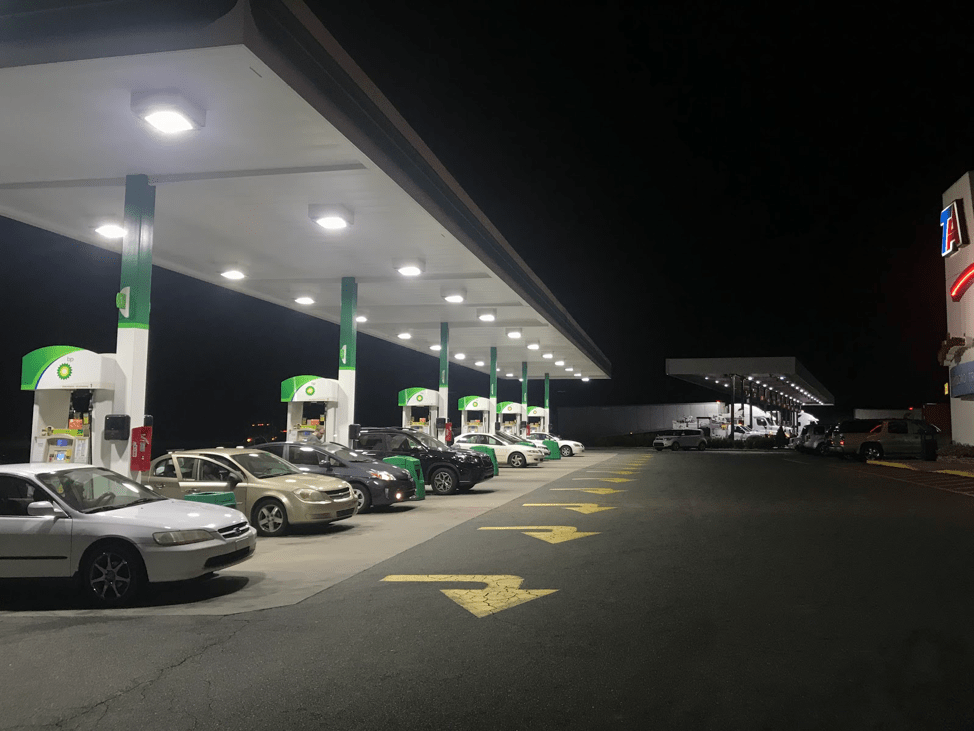
Travel Center of America: Whitsett, North Carolina

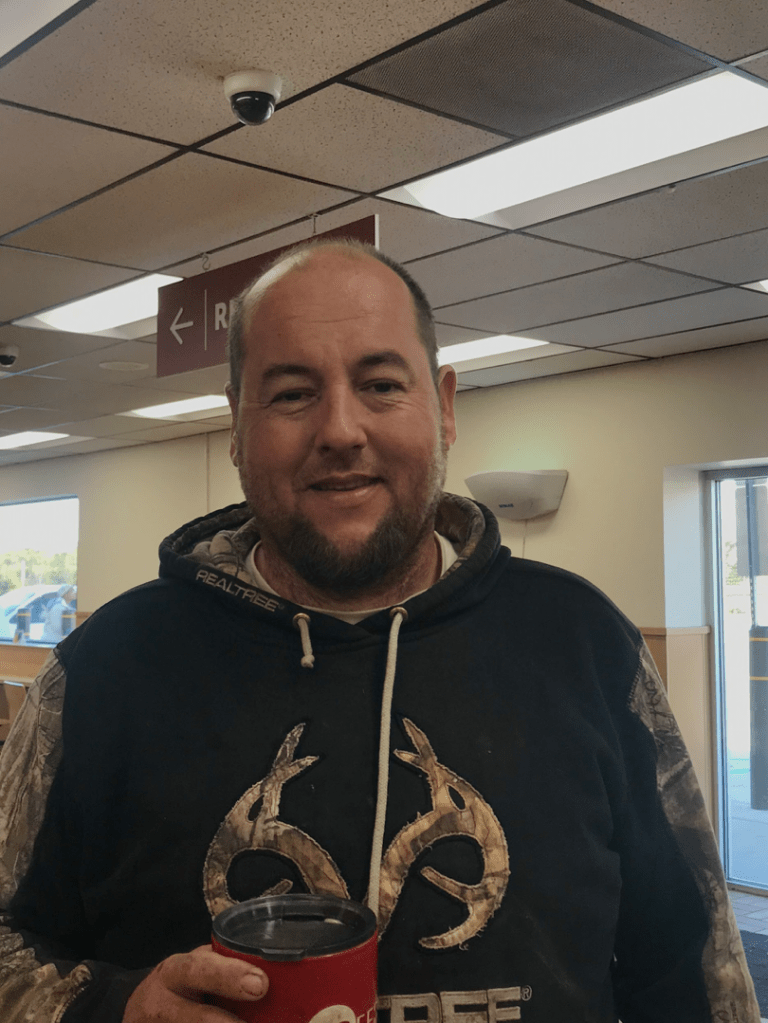
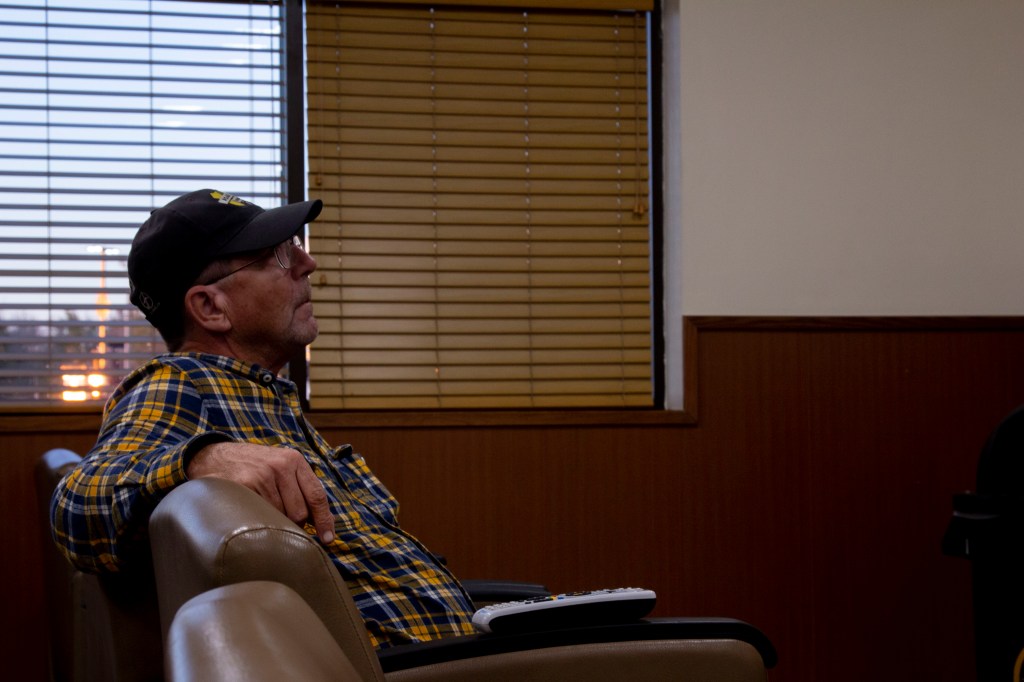
Photo: Hannah Nelson

By Uma Nayar, Ashleigh Afromsky, Hannah Nelson

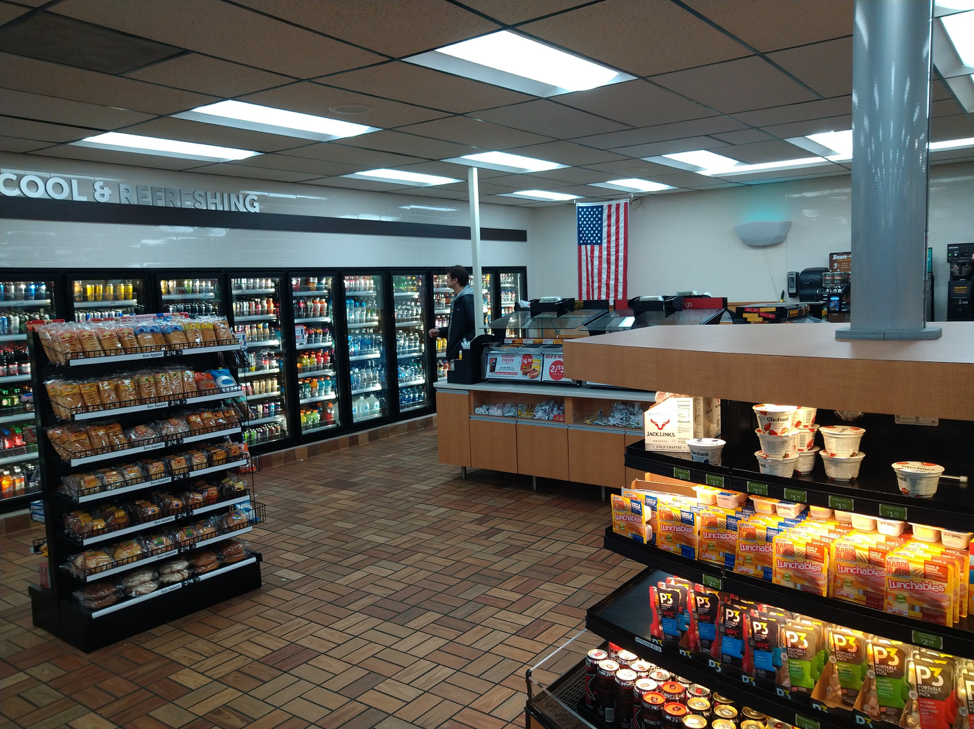
It is 7:30 on a cold November Tuesday night at the TA Truck Stop, part of the
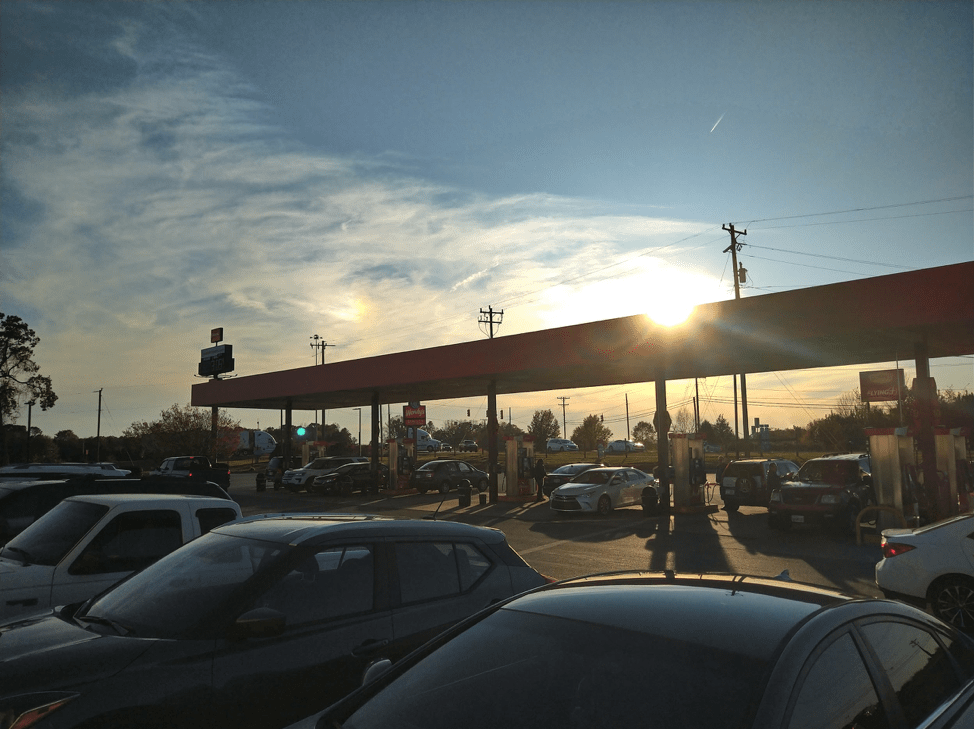
TravelCenters of America chain, in Whitsett (pop. 560 or so), just off I-40 on NC Highway 61. The lights inside and out are blinding, and people are bustling around.

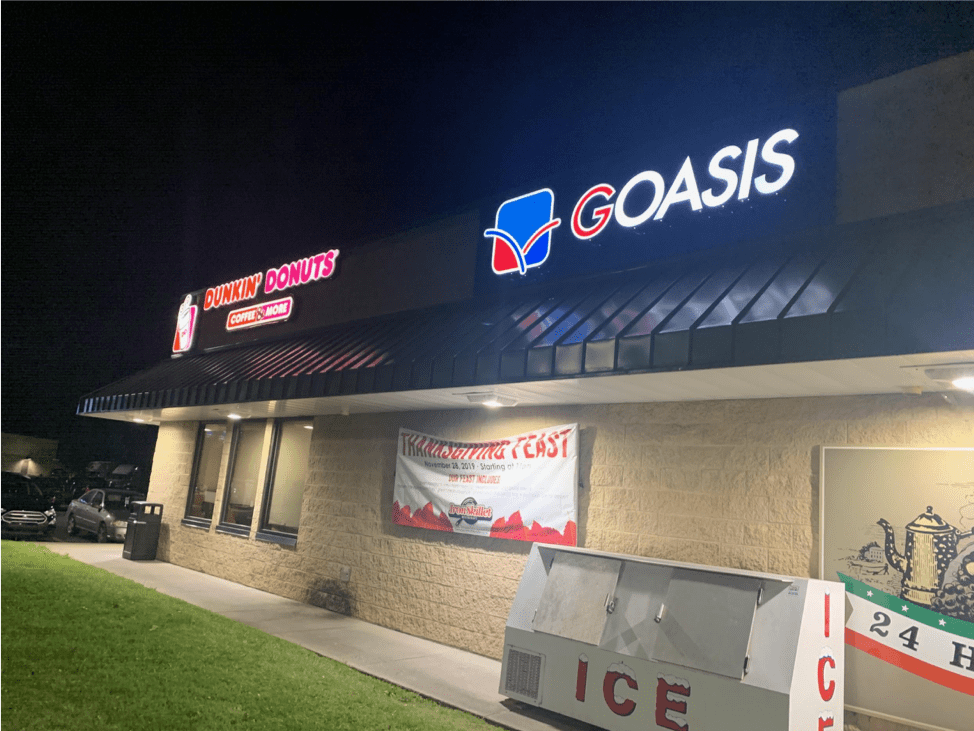
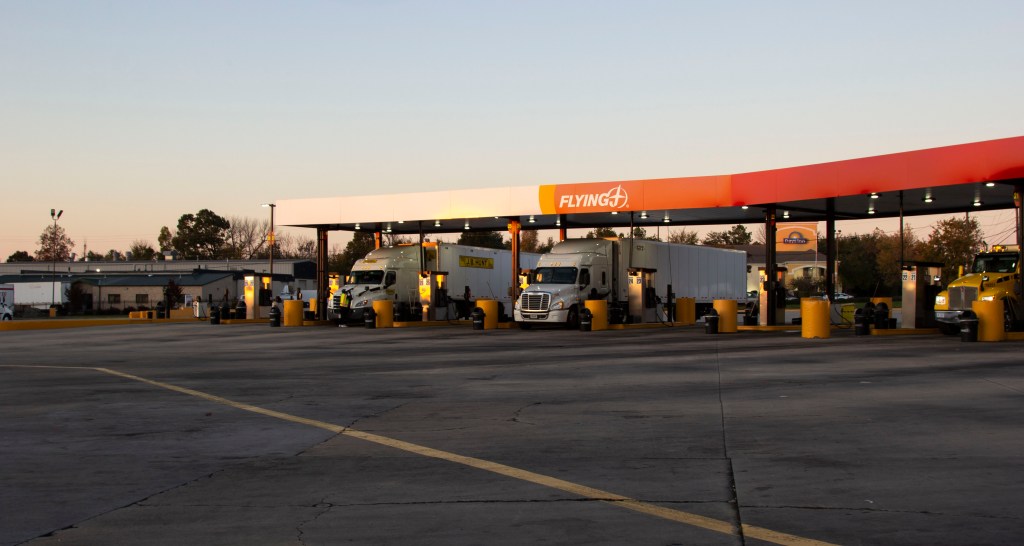
There are two sets of multiple gas pumps for cars and trucks on two sides of the building. Signs advertising Popeyes, Burger King, a Greensboro Travel Center and Goasis are lumped together in a glowing line. Truckers and travelers stop to get dinner, fill up on gas and food, and rest for a bit before hitting the road again. 

Some open up about their journeys so far.

Thomas Bratton

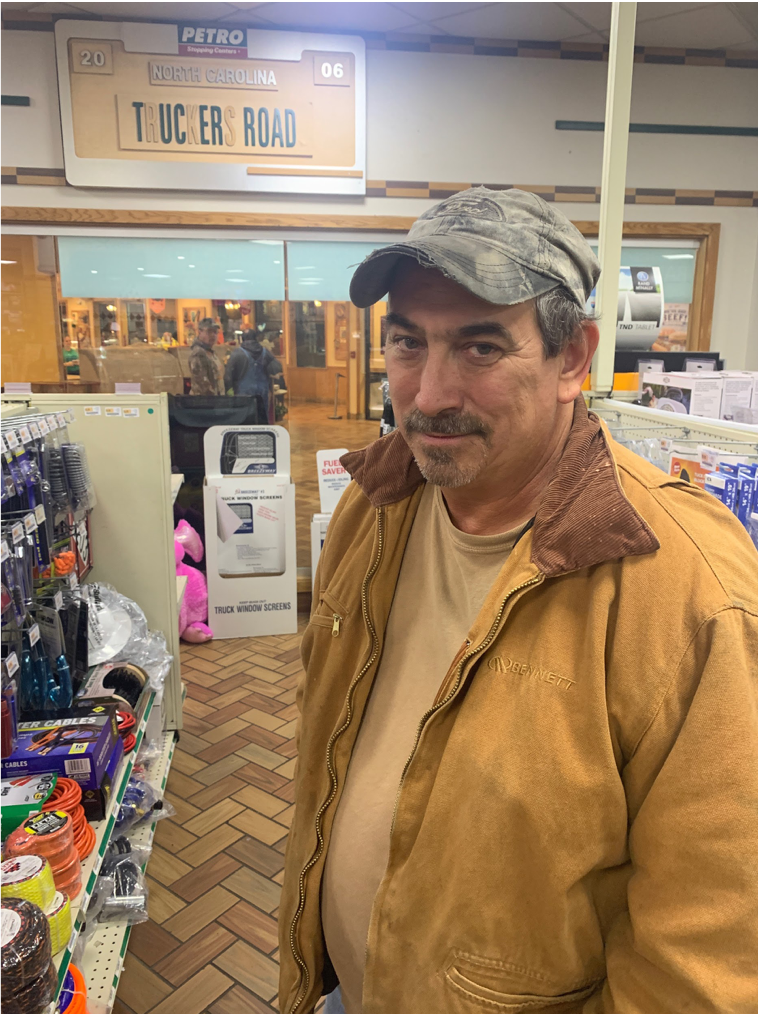
Thomas Bratton is open and funny. He’s from West Virginia and drives trucks from the East Coast to Kansas City. “Truck driving, you need a unique skill set. You may be a driver, but doesn’t mean you know how to drive a truck.” 

Bratton said he started as a truck driver before going to work in the coal mines in his home state. He worked in coal for 34 years before the company he worked for went bankrupt. “My wife said, ‘What are you going to do?’ And I said, ‘Go back to driving a truck,’ and she said ‘Okay.’” 

Bratton drives for about six weeks before coming home and resting for four days, then leaves again. He talks about the advantages and disadvantages of being a truck driving. 

“The one thing that’s probably the biggest disadvantage is being away from home,” he says. “But that’s not to say there ain’t any advantages. For one, I have six grandkids, and when I stop in Savannah, Georgia, there’s a truck stop near where my youngest three grandkids live, so it’s a nice pick me up.”
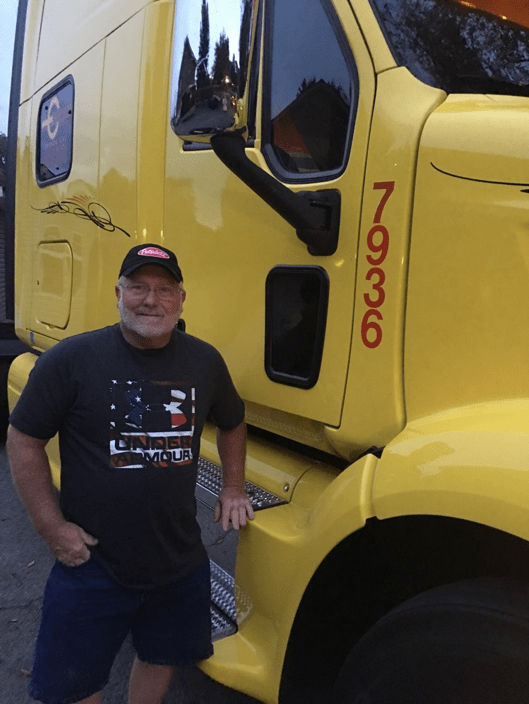
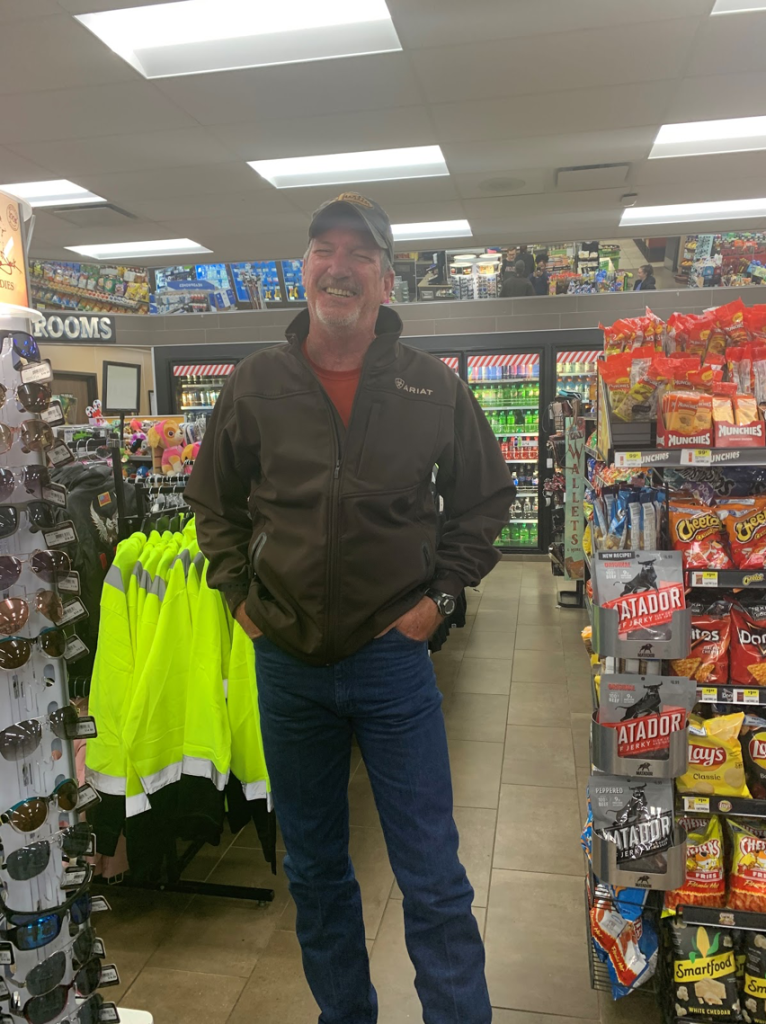
Thomas Bratton and his yellow Peterbilt truck. Photo submitted by Bratton.

Bratton lists his favorite truck stops: TA in Perrysburg, Ohio, and the Iowa 80 TA. When asked what makes these truck stops a cut above, he says “cleaner food, and the showers have actually been cleaned, which makes the difference to me. Just because I’m a trucker don’t mean I don’t have standards.” 

Bratton also discussed the goods he’s transported over the years, and proudly talked about his skill as a trucker.

“I can drive anything known to man,” he says. “And I’ve pulled practically everything except a space shuttle. 

“I’ve pulled the fuel for it, but not the space shuttle.”
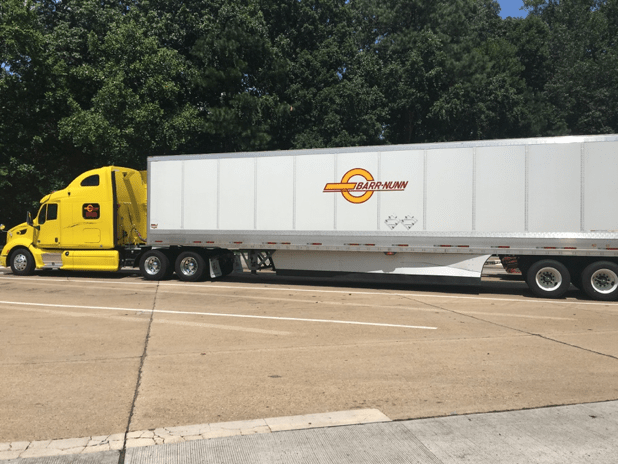
Photo submitted by Thomas Bratton.

Ruby Kirkpatrick

Ruby Kirkpatrick, a Popeyes cashier, works the 7 p.m. to 3 a.m. shift. Kirkpatrick said the work is easy but tiring. She lives in Greensboro, about 15 minutes from TA. 
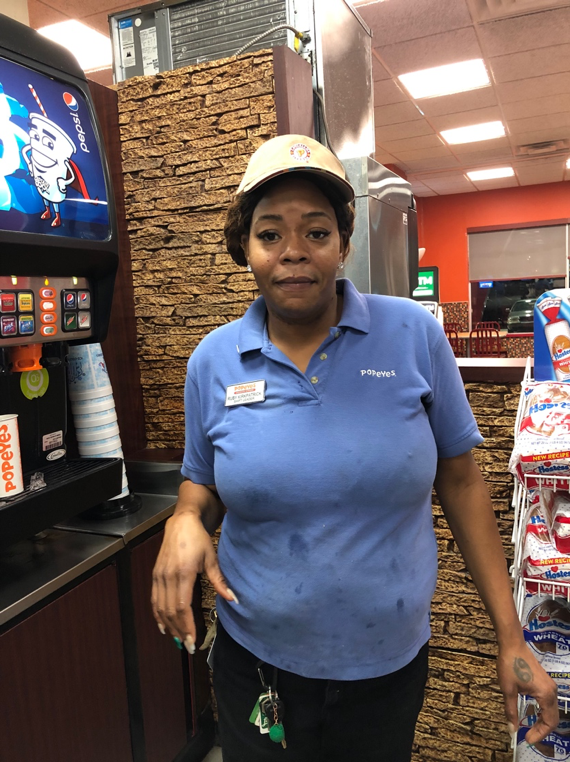
Ruby Kirkpatrick. Photo: Uma Nayar.

“We get a lot of truckers through here, and they are so nice, sometimes nicer than regular people.”

Larry Young

Loosening his tie, Larry Young settles into the stiff Popeyes chair and lays his briefcase down. Young, 46, bites into his Popeyes chicken sandwich excitedly, as if it was his reward for a long day at work. 

“I work in the pawn business,” he says. “On a day to day basis, I help people get loans, negotiate between sellers and customers, and assist in pricing certain items.” 

Young lives in nearby McLeansville, with his wife and two children, ages 10 and 12. Originally from Georgia, Young moved to North Carolina in the early 2000s when the company he was working for relocated. 

“I’m just trying to enjoy my dinner so I can get home to my family,” he says. 

Young visits the Travel Center of America once a week for dinner, alternating between getting a Popeyes chicken sandwich and a Burger King whopper. 

Julian Thaxton

Julian Thaxton, a Burger King employee, has been working at the TA Burger King for a couple of months, and lives in Burlington. He works the 8 p.m. to 3 a.m. shift. 

“You get all different types of people coming through here,” he says. “The other day I saw this junkie and he was tripping. He was sitting there in a chair but he had his head in-between his legs near the ground.”

Thaxton also talked about his workload. He said the hours are long and tiring, but “teamwork makes the dreamwork” during these long shifts. “I like all my coworkers ’cause we all make the night way more easier, you know?” 

James Monk

James Monk, a college student from Richmond, Virginia, was driving from Charlotte back to Richmond. “I came through [North Carolina] when I came last night,” he said. “My cousin was Miss NCCU (North Carolina Central University) and she got crowned last night.”

Monk made the long drive come to show his support for his cousin. “I’ve got family in Atlanta as well, so I come through here pretty often,” he said. 

Monk is studying sports medicine and hopes to become a physical therapist one day. This comes from his passion for sports.

“I play football and basketball, and ran track as well,” Monk said. He plays semi-professional football now for a team in Richmond called the RVA Tomahawks. 

Monk travels “on and off” for sports, and has been to places such as Baltimore, Philadelphia and Atlanta. Atlanta is his favorite place he’s been to so far. 

He had about three to four more hours of driving until he got back home to Richmond. 

There’s “not a lot of traffic,” he said, “so everything’s going smooth for me.”

Miller and Tucker

Two teenagers sat across from each other in the Popeyes restaurant but exchanged no words as they were both engrossed in their phones. Miller and Tucker, ages 18 and 19, are both freshmen at Elon University. 
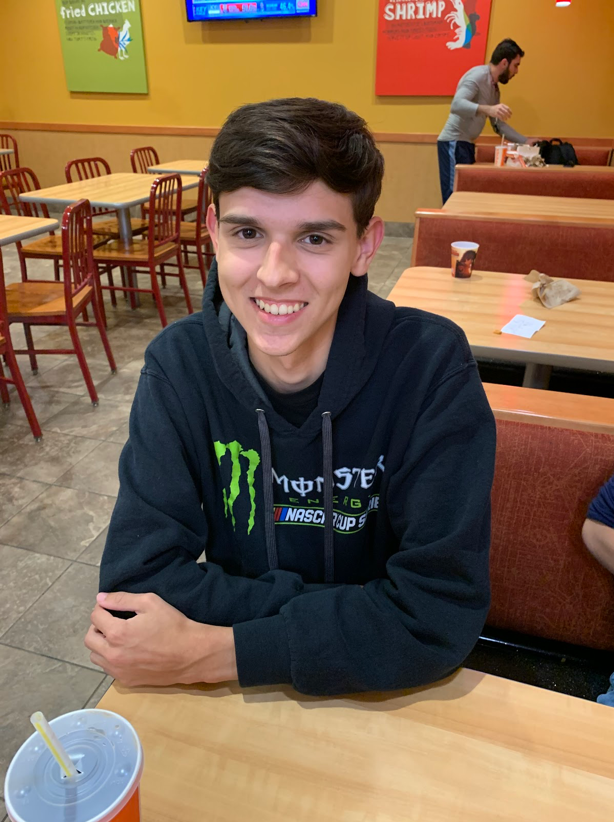
Miller. Photo: Ashleigh Afromsky

This was Miller and Tucker’s first time visiting the Travel Center of America. They were craving Popeyes and this was the closest restaurant. “This rest stop seems like a nice place. There’s a lot of selection and two fast-food places to eat,” Miller said.

Both originally from Virginia, Miller and Tucker came to Elon for two very different reasons. 
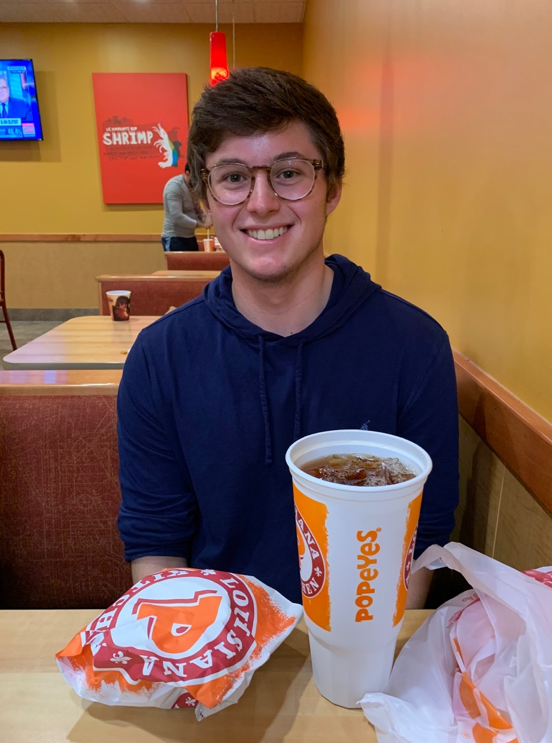
Tucker. Photo: Ashleigh Afromsky.

            “I chose Elon because I want to work for NASCAR,” Tucker says. “I was looking at schools in North Carolina because this is where a lot of NASCAR teams are located, and I liked Elon the best.”

            “It was between Elon and Clemson,” Miller says. “I didn’t get into Clemson, so I decided to come to North Carolina.”
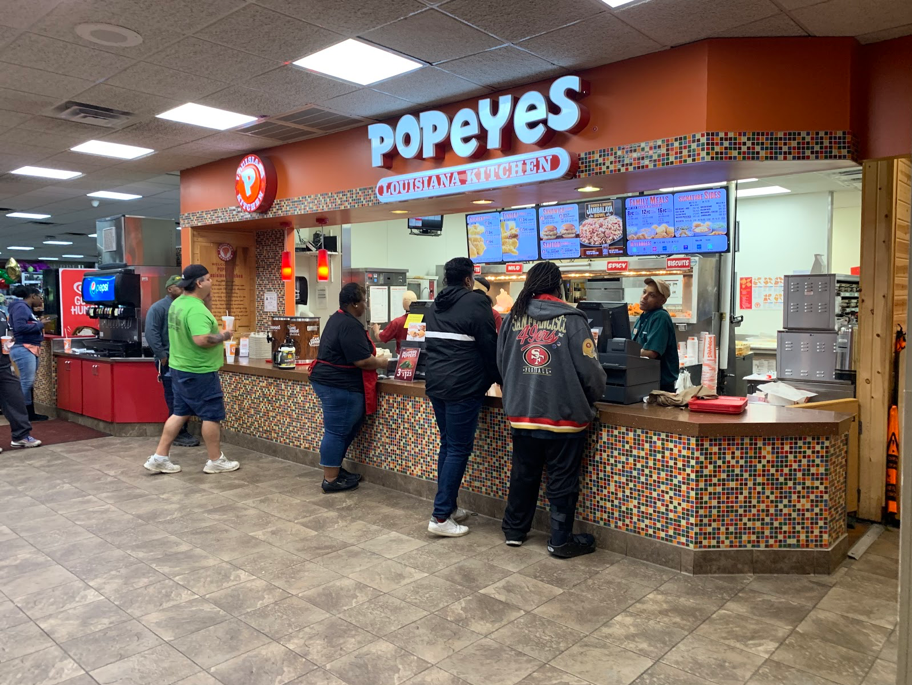
Photo: Ashleigh Afromsky.

Jenny McCarthy

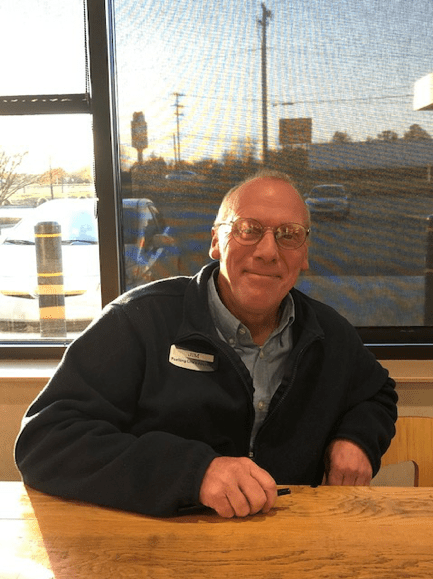
Jenny McCarthy, 61, serves as the assistant general manager of Travel Center of America. 

She leaned over in aisle four, taking inventory of the “Flamin’ Hot” Cheetos, as she tucked her slightly frizzy gray hair behind her ears. As she made notes on a clipboard, her Southern accent was prominent as she quietly talked to herself. 

When asked what she does as the assistant general manager, McCarthy replied, “A better question would be, what don’t I do? I take inventory, deal with people, and pretty much make sure there’s no trouble here.”

 A Virginia native, she moved to North Carolina 34 years ago and has been working at TA ever since. “I love my job,” McCarthy says. “It’s the people that make me stay here. 

“Truckers, tourists, people traveling to work – you never know who you’re gonna meet.”
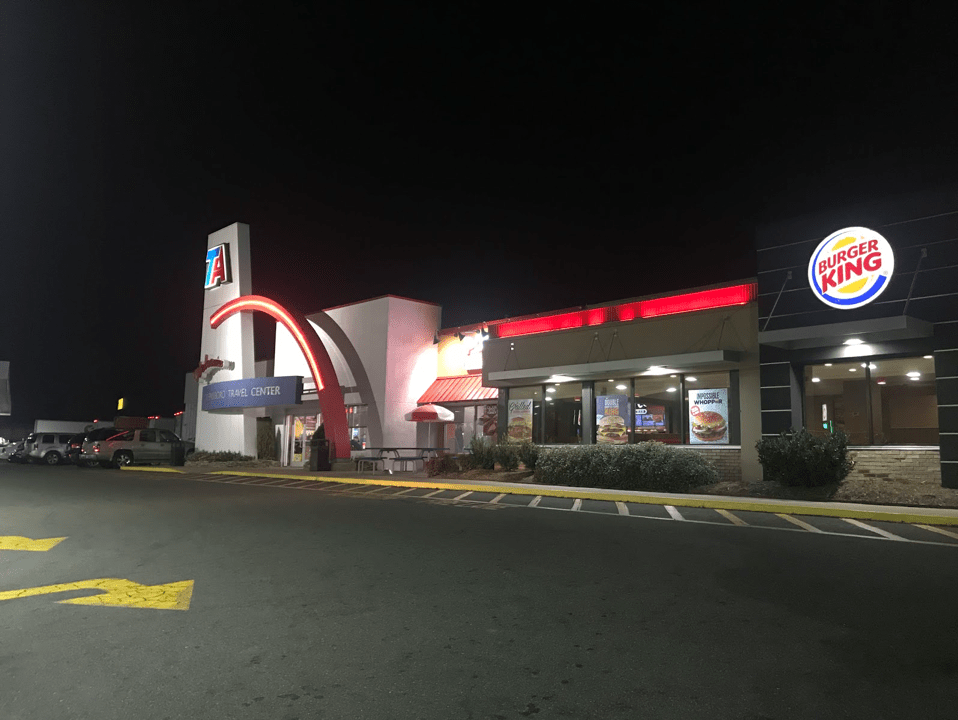
Photo: Hannah Nelson.

The truck stop that created a family

By Caitlin Rundle, Isabella Seman and Grace Dorsett

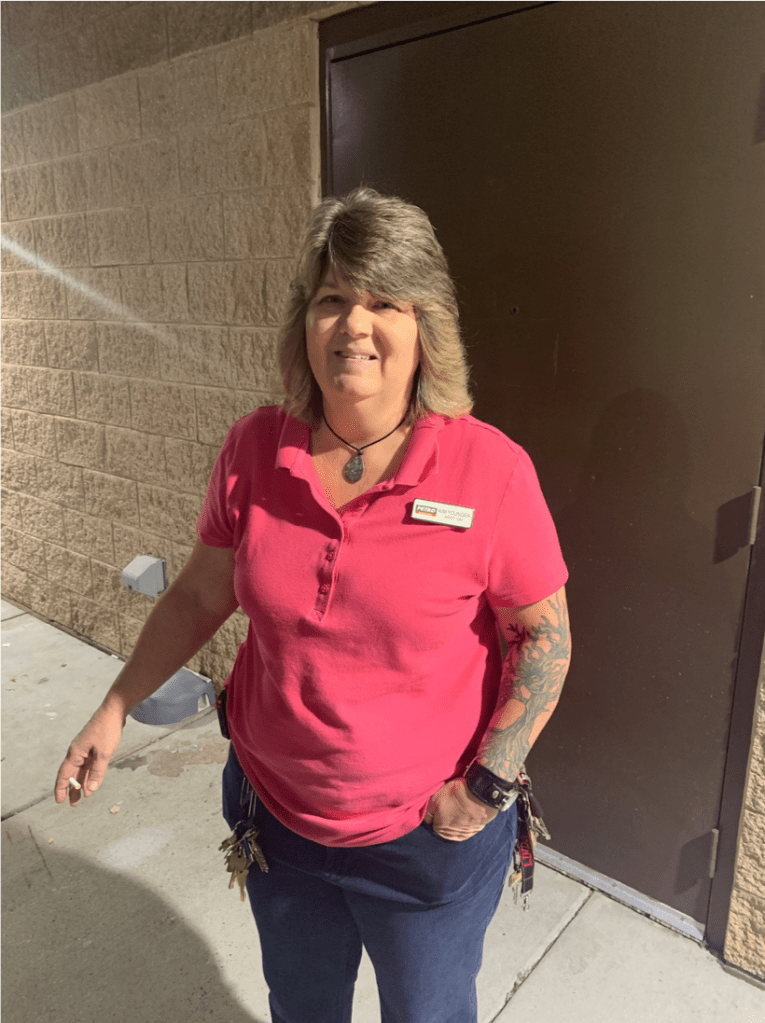
Kimberly Younger became the manager of Petro Stopping Center #329 18 years ago. She prides herself on the family atmosphere of her truck stop. Photo: Isabella Seman.

Kimberly Younger

Kimberly Younger accepted a job at Petro Stopping Center #329 18 years ago and hasn’t looked back since. Younger grew up on Langley Air Force Base in Hampton, Virginia, but her mother moved Younger and the rest of the family to North Carolina three decades ago. 

Younger is now the manager of Petro Stopping Center, an offer she said was presented to her by Petro to keep her from leaving to work at the nearby Flying J truck stop. She said she doesn’t think there is much competition from Flying J.

“I get better fuel prices than the other places. We don’t give a discount because I think our diesel is low enough,” Younger said. “We have better showers than them, plus more showers. They might have eight showers or five showers, where we got 19, so there ain’t no waiting ever.” 

Younger says that many of the truck drivers she sees come into Petro are regulars, and they all bring their unique stories to the table. 

“Every day here is a different day,” Younger said.

Charles

Charles, a truck driver who gave only his first name, had parked his large rig at Petro and was recounting an experience he had when he was stopped in a construction zone. A drunk driver had driven underneath his truck, and Charles never even felt the car hit his trailer. 

“The guy behind me started hollering on the radio, ‘Don’t move, don’t move, there’s a car under your truck,’” Charles said. 

Charles said he’s driven 22 years without another accident like that one, and he prioritizes safety over everything.

“’I’m not only sharing the ride with my family, but your family and everybody in here’s family. I’m not gonna hurt anybody,” he said.

Charles has been a truck driver for 22 years and has only had one major accident. A drunk driver drove underneath his truck when Charles was stopped at a construction site. Photo: Isabella Seman

Family is something that Charles still makes time for in his work schedule. He owns his truck, and therefore is the master of his own schedule. 

“I normally stay out five or six days at a time and then I go home for three,” Charles said. “I say when I work, when I don’t work, where I work, things like that.”

Charles says because of his schedule, he’ll spend Thanksgiving with his family before going back out for more driving. At the end of the day, he likes being home with his family, but he also enjoys his quiet time on the road. 

“I like being by myself,” Charles said. “I don’t got to put up with idiots in lines or stores.” 

Wayne Tinnin

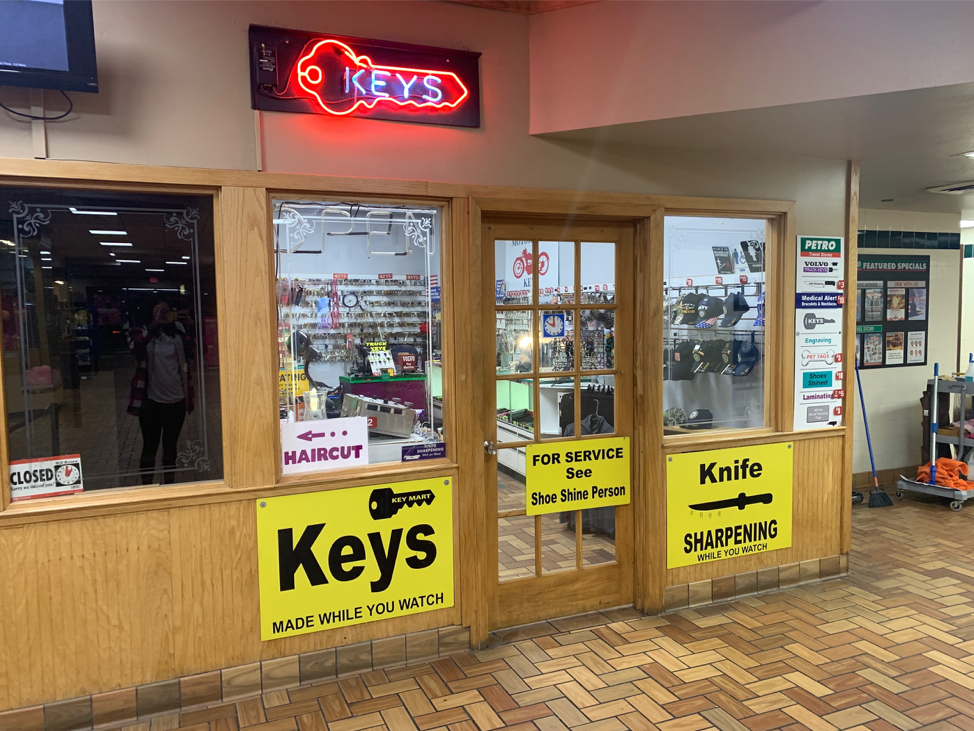
Wayne Tinnin is the owner of the key shop in Petro. Tinnin started the business in the truck stop 20 years ago and says that his favorite part of his job is hearing the stories from the other truck drivers.

“The biggest thing about truck drivers’ stories is how they get locked out of the truck,” Tinnin said. “I’ve heard stories like some of them getting locked out in their underwear and get locked out in the snow and ice, or getting out and locking the door by mistake and falling and can’t get back in the truck.”

Tinnin has been with the Petro truck stop since it was rebuilt and was one of the first employees hired. He has also trained others in the key business. 

“They was building this truck stop new and when they got it finished I came here and applied for a job,” Tinnin said. “I was able to help another guy with the key business here, I helped him learn that business.”

Wayne Tinnin’s key shop. Photo by Isabella Seman.   

Tinnin doesn’t only spend time at the truck stop. As a lifelong resident of North Carolina, he has found other ways to stay busy. 

“In between the truck stop, working at Walmart and that key business, I’ve stayed busy for the last 24 years,” Tinnin said. 

“It’s quiet here in the morning but it picks up at night. Truck drivers start coming in, having a shower and dinner and whatever, get some rest so they can go out early in the morning, so I try and stay here and sell some key accessories and keys to the truck drivers.”

The people who come into the Petro truck stop have become family, says manager Kimberly Younger.

“They just come in and say hey and all that. They remember me, you know?” Younger said. 

“But, you know, they’re good people. They really are.” 

Petro Stopping Center #329. Inside features a Dunkin’ Donuts’ as well as a truck driver convenience store, 19 showers, a sit-down restaurant, and a key shop. Photo by Isabella Seman

Taking a break at Pilot during rush hour

A Georgetown University hockey player browses the drink selection at the Pilot truck stop. Photo by Elliott Rivette.

By Emery Eisner, Hannah Massen, and Elliott Rivette

The Pilot on Jimmie Kerr Rd. in Haw River glowed in the setting sun, a beacon of neon signs and glass windows for the tired, the hungry, the huddled masses yearning to breathe free. 

Drivers took a break at Pilot from rush hour traffic on Friday afternoon, Nov. 8, to refuel their vehicles and themselves. 

 Drivers fuel up at Pilot. Photo by Elliott Rivette 

Gassing Up

Like many truck stops, Pilot was a hive of activity. The front door chimed whenever a customer entered or left. A man and a woman stood silently near the ice machine in 38-degree weather wearing short sleeves and capri pants. An employee in a green hoodie removed the trash from the outdoor cans and loaded the bags into the back of a golf cart. Big rigs were already parked for the night.

A bearded man was price-comparing bottles of lighter fluid. A Vietnam War veteran and his wife were taking a three-hour trip home after a surgical procedure, and a woman in a blue shirt carefully selected a baker’s dozen at the Dunkin’ Donuts stand. A man named Joe Kooley and the rest of his Georgetown Hockey team were on their way to Charlotte for a game.

A redheaded woman named Erica Davis stopped in for a DQ Blizzard on her way to Banner Elk.

“I come here for the bathrooms,” she said. 

Managing Kindness 

Travel Center General Manager Jim Lucas said his three-year stint at Pilot– and three decades in retail– have shown him the power of human interaction. 

Jim Lucas poses in the Wendy’s dining room located inside the Pilot station.
Photo by Hannah Massen.

In a given day, Lucas says his daily tasks “vary significantly based on the needs of the business,” overseeing Pilot’s travel, fueling, and retail sectors.

While Lucas’s job may change from one hour to the next, he said one constant is the joy he gets from talking to people.

“Every time someone walks through the door it’s different people,” Lucas said. There are regular Pilot customers that “are pleasant to talk to,” but he tends to get the most attention from his taste in music, he said.

“I get a lot of comments on the Grateful Dead,” Lucas said as he held his phone case bearing the band’s famous logo. “That’s kind of a cliché for old people at this point, so the people that come in and see my phone and will make a Dead comment, I love talking to those people and I go off on tangents on that.”

Though Lucas admits there is no shortage of local truck-stop competition, he says this Pilot is set apart by its distinguished guest services.

“Drivers can go anywhere,” he said. “There’s a million mom-and-pops out there … they can buy diesel anywhere, they can buy a soda anywhere, a bag of chips anywhere. It’s up to us to give them a reason to come back here.”

Ultimately, Lucas said he has always enjoyed giving customers a good experience.

“What I’ve found after 30 years in retail is that for the most part, people are pretty cool,” Lucas said. “You do get your upset guests, you get your drunks, but for the most part people are good. It’s not that hard to turn a negative into a positive…You can make someone’s day a lot better just by listening to them and talking to them like they’re a human being, not being condescending. 

“You know, I like people so it’s easy for me.” 

Working for Decades

One of the employees at the Pilot has spent the past year and a half juggling multiple roles. Stacy McMillan, the man in the green hoodie who took out the trash and loaded it on the golf cart, was busy gathering up waste from bins positioned around the building. He loaded up a massive translucent trash bag into the back of his cart. 

It’s not particularly busy today. When the lot is completely packed with vehicles, the inside of the building is usually empty. McMillan explained that it only seems busy, but patrons are either in their vehicles or inside the establishment and the crowds seem to flow in and out quickly. McMillan adds that he has befriended “quite a few” truckers that have been doing the same job for more than 20 years.

In addition to his janitorial duties, McMillan operates various cash registers in the station, except for Dairy Queen. 

While McMillan gets along well with his manager, some coworkers can make things difficult. Using “petty” tactics, he says, some employees are constantly looking over his shoulder and attempting to act as his boss. After nearly two decades of expertise with his work, McMillan does not enjoy having people breathing down his neck.

Stacy McMillan prepares to transport waste outside the Pilot. Photo by Elliott Rivette.

“I come in and do my job,” he said. “I don’t need a babysitter.”

McMillan is 35 years old and has been working with the Pilot chain corporationsince he was 16. The general manager at this location, Lucas, assigns employees to their various roles. Lucas, he says, is “the best.” McMillan has received three raises during his time at the station.

“I love it here, actually,” he said.


The hero, the immigrant, and the miracle boy

Steven Cosner getting his usual Dunkin iced coffee from the Pilot truck stop.  Photo: Sam Hess

By Julia Oakes, Samantha Hess and Callista DeGraw

Saturday, Nov. 9 was a cloudless, windy, 40-degree morning at Pilot #57 off I-40 in Mebane. With locals and travelers stopping in from all over, the chances of encountering a unique story at this rest stop are far from slim. 

The Hero

            Steven Cosner can often be found at Pilot pouring cream and sugar into his Dunkin Donuts iced coffee. Cosner is from Danville, Virginia, but works as a foreman at the Triangle Grading and Paving Co. in Pittsboro, North Carolina, an almost two-hour drive from his house. 

“Four hours a day, I’m driving,” Cosner says. “I come to this stop often because I hit this road, go north, then jump over to 119 and go home. From here on it’s pretty much just country roads.”

            On this Saturday, Cosner was driving home from a job he was working in nearby Burlington. With a wife and four kids at home, it can be difficult being away so much, but he makes double the amount of money at his job in Pittsboro than he would in Danville. “North Carolina’s growing a lot faster. We don’t have the same kinds of opportunities in the country,” he says. 

            Cosner has been building since he was a child. He began with LEGOs and Lincoln Logs when he was in kindergarten and says he never stopped. He even got the opportunity to build one of the storage units in the area around the Pilot truck stop, and did the grading for the area as well. In eighth grade, Cosner says, he took a profession predictor test, and he was expected to become a farmer.

            “I do run equipment, I’m almost there. I just gotta grow stuff,” he says. “I live on a 200-acre farm now with only five neighbors. There’s about two miles in between each one of us.” With a long, hectic commute, farm life is relaxing for Cosner, and he makes money from people who rent his land.

With all of the talk of LEGOS and farming, Cosner modestly buried the lead about a moment that nearly cost him his life.

In 2013 he went through an ordeal when trying to save children from a house fire in Gibsonville, a small town just down the interstate from the Pilot. Although he was praised for his heroic efforts, the two children died in the fire.

Cosner also suffered significant burns from running through the flames.

“I was in the hospital for about six days, and I still have scars from the burns I suffered,” he says. “My buddy and I saw the smoke on our way to work.”

Cosner, a father of four, was quoted in a news story at the time as saying he had no choice but to attempt to save the children.

“I just had to do something.”

The Immigrant

While the coffee station is Cosner’s reason for stopping at this Pilot, others come for different perks. One man who wanted to be identified only by his first name, Dede, explained that he stops at Pilot and Flying J truck stops for their rewards program.

“All the Flying J and Pilots have an account for fuel, so every time you put fuel in, you get a free shower. It’s 12 cents less than fueling somewhere else, so most of the time I stop here.”

            While he is originally from Haiti, Dede and his family have lived in Miramar, Florida since 2000. He moved to the United States for “a lot of reasons, mostly politics.” He still visits relatives who remain in Haiti.

Dede works as a truck driver delivering household goods and furniture all over the country. On this Saturday, he was on his way to Tennessee, but was in Connecticut just three days prior. When asked if his route includes cross-country or just the East Coast, he says that while he’s traveled all over, his main locations are Florida, Chicago, Boston and New Hampshire. 

Dede can’t decide which place he’s driven to is his favorite so far. “I’ve been to so many of them. I’ve been to Vegas, California, Washington State—everywhere has a different vibe.” He maintains that he prefers Florida because “I don’t like the cold.” 

            He explained that his stops at Pilot and Flying J are typically on the longer side, due to a Department of Transportation rule. “Normally, after 11 hours of driving, you have to stop for 10 hours. That’s the requirement.” Dede says the company is able to keep track through an “E-log,” which marks how long a driver has been on the road and how many consecutive hours they stop for. Should a driver fail to stop for the required amount of time, the company is in jeopardy of being shut down. 

Dede had just walked into Pilot to fill up his coffee and hadn’t made it very far into his 10-hour rest period. At some point he may get his free shower. 

The Miracle Boy

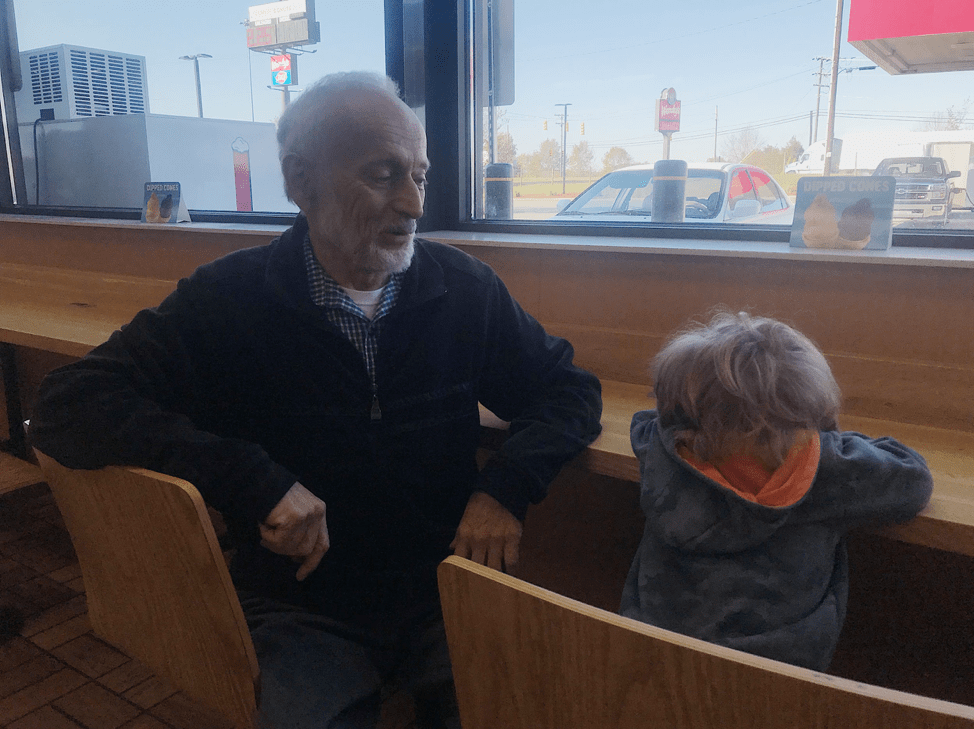
Some people come to Pilot #57 for the doughnuts and the view. Sitting at a table in two adjacent seats facing the window, were 5-year-old Milo and his grandpa, who wished to remain nameless. The pair munched on miniature Hostess doughnuts as they watched trucks fill up at the gas pumps outside. 

Every morning from 9 a.m. to 11 a.m., the duo gets together for what they call “Grandpa time,” the man said. This morning, they decided to set up camp at the Pilot Travel Center in Mebane. 

“Part of the tradition is to come here once a month or so, and we get doughnuts and watch the trucks. He loves the trucks,” Grandpa said.

Milo and Grandpa, who are locals, try out different spots to spend every morning. But no matter where they go, the time they spend together is cherished, especially by Grandpa. 

Milo, who was playing shy, didn’t say much. Nonetheless, his smirks, giggles and playful game of “hiding behind the chair” made it clear that he was no wallflower. 

“You’d think he’s quiet. He’s really very loquacious,” Grandpa said, beaming at his grandson. 

Named after the disease he was diagnosed with in utero, Myelomeningocele, a form of spina bifida in which the backbone and spinal canal do not close prior to birth, Milo was expected to never be able to walk. “It was the worst kind,” Grandpa said. 

Milo and his grandfather sitting outside of the Dairy Queen at the Pilot truck stop, looking out at the trucks entering and leaving the parking lot. Photo: Sam Hess

But for this vivacious little boy, who couldn’t seem to avoid squirming about in his chair, a life-restricting disease seems as though it could not possibly be a part of his story. 

“He was miraculously cured in the womb. Doctors can’t even explain it,” Grandpa said. 

Milo, a charismatic little boy who loves to pick up sticks and toss rocks, is truly a walking miracle, Grandpa said. And Grandpa refuses to let a day go by in which he doesn’t recognize that blessing. 

Nothing gives Grandpa more joy than being able to share Milo’s story with others, even those he has just met briefly at a truck stop. 

“You saw a miracle today when you stopped in.” 

A Break from the Road

By Jacob Berman, Eric Kanzinger, Jon Sarver Jr.

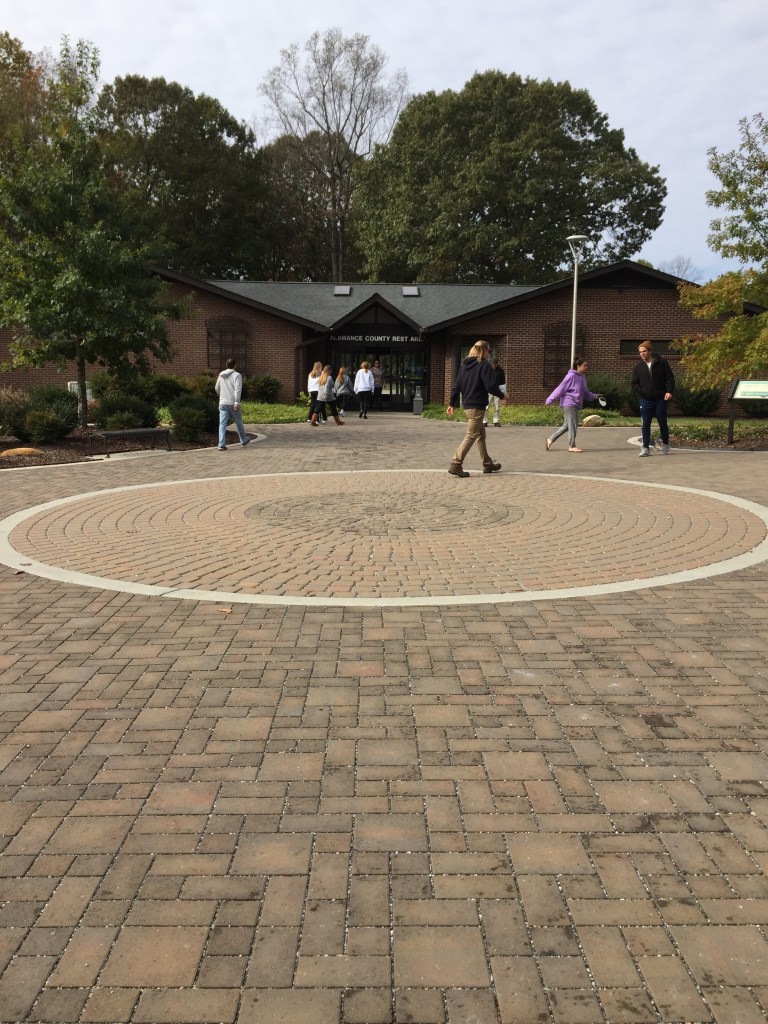
Near mile marker 139 where Westbound I-40 and Southbound I-85 run concurrently just outside of Burlington sits a North Carolina Rest Area. On a chilly Friday afternoon, the rest area parking lot is a hive of activity.

Dog owners stretch their legs while taking their pets out for relief. Weary drivers sit at picnic tables, which are placed around the main restroom. A disheveled man smokes a cigarette in front of his rusty pickup. 

When one car backs out of a parking spot to go on its way, there is always another vehicle pulling in to replace it. Rest stops like this one serve as a way for drivers and passengers to get a short break from the road, and each other.

Photo: Eric Kanzinger.

The Renaissance travelers

Over by a tree next to the picnic tables are two women with cats. One cat is on a leash, while the other one, a minuscule white cat, is cradled in one of the women’s arms. The woman holding the cat is named Erica. 

Erica says she is from Garner, North Carolina. She and two of her friends are on their way to the Carolina Renaissance Festival near Charlotte. Along for the ride is a pit bull named Darwin. The tiny white cat is Kokomo, and the Siamese cat on the leash is Zara. 

At the Renaissance Festival, there are games and food, and festivalgoers can wear medieval-themed costumes. 

“I didn’t bring anything but I heard you can rent costumes,” Erica said. 

The group is staying with one of Erica’s friends who lives near the festival, so they don’t have to worry about finding a pet-friendly hotel. Erica’s friends load the animals into their Toyota Prius, and they head off on their way towards Charlotte.   

Deciding on his future:

The following morning at the rest stop, a high school senior named Brooks Griffin dressed in khaki pants, a white t-shirt, and a heavy flannel stops during his marathon of a college tour. A tall, skinny kid with a scraggly beard, Griffin exuded confidence as he tried to decide which school he was going to go to. 

“We’re going to Elon, High Point, UNC, and NC State,” he said. Griffin said he is applying at 15 different schools up and down the East Coast, as far south as Florida. “North Carolina is just a stop along the way.” 

Born and raised in Westport, Connecticut, Griffin’s main reason for looking South is to get away from the cold. He’s lived in Westport all his life and, like many high school seniors, is ready for a change in scenery. 

When asked why he was applying to 15 schools, he said, “all of my friends are doing the same thing.”

As Griffin and his family pulled out of the rest stop to get back on the busy highway, a flurry of travelers pulled in to replace them. 

Bill, William and the Flying J

By Maeve Ashbrook, Aidan Rodriguez and Mackenzie Wilkes

As the sun set on a chilly Wednesday night, a man smoking a cigarette slowly crossed the parking lot of the Flying J Travel Plaza in Haw River, trying to distance himself from a woman asking for money and cigarettes. “Driver Bill,” as he calls himself, was wandering back to where he parked his truck. 

He said he gave her money but refused to give up one of his “premium” cigarettes. 

After taking his last puff of one of those premium cigarettes, he threw it down and smashed it with his foot. Bill said he doesn’t leave lit cigarettes lying around.

“I didn’t know drivers were so nasty until I became one,” he said.

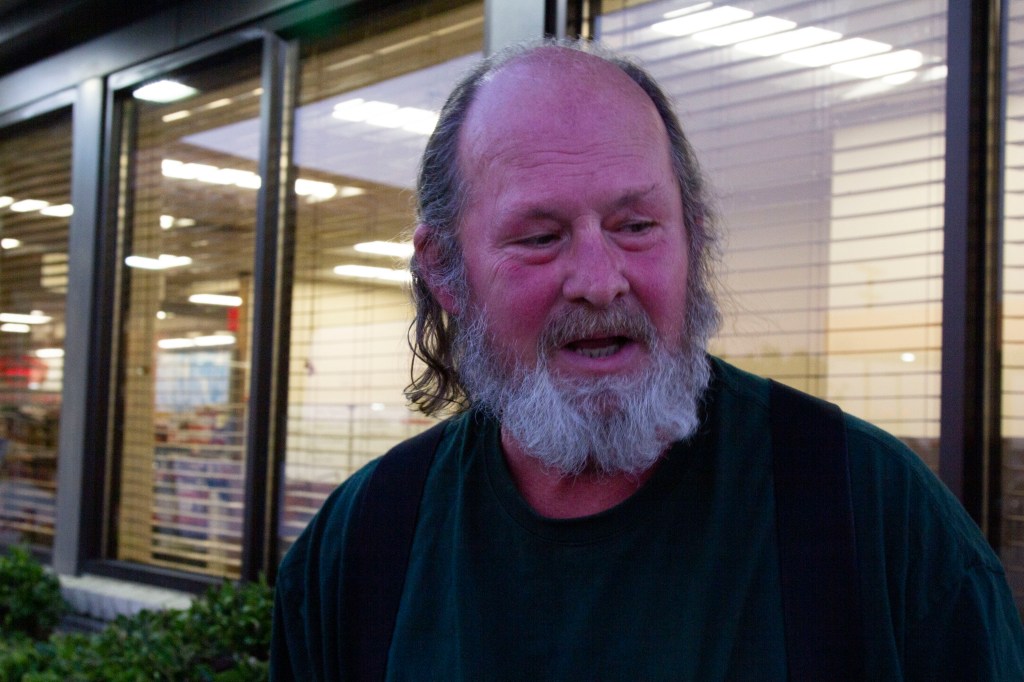
Driver Bill tells one of his many stories. Photo by Mackenzie Wilkes. 

Driver Bill has been to all 48 of the continental states and several provinces in Canada. 

“If you have a buffet and there’s a driver there eatin’, don’t go after him,” he said. “Because I’ve seen it where they don’t even wash your hands when they come out of the stall.”

Bill said his desire to become a truck driver was born while he was driving military vehicles for the National Guard. After he finished his years of service, he hit the road again as a driver.

“The deuce and a half gave me the fervor,” he said. “So, I’ve been doing this for about 12–15 years.”

Reminiscing about driving the highways and interstates of America, Driver Bill’s time in the union’s smallest state resulted in one of his biggest memories.“Rhode Island has— it’s the smallest state— it has one truck stop and I got kicked out of it,” he said.

Bill said that his attitude had gotten the best of him at the lone TA truck stop in the Ocean State.

“My temper. I went off on somebody. I don’t know why,” he said.

Inside Flying J, where showers, washing machines and a television were available for drivers, William Hyche was watching the SYFY channel. Hyche has been a trucker for 13 years. He’s a North Carolina native who’s from “just off 95.” He recounted hazards of life on the road.

Trucker William Hyche enjoys a television show. Photo by Maeve Ashbrook.

“People texting, on their computers, reading newspapers while driving 80 miles per hour,” Hyche said in a thick Southern drawl. “Y’all better not be texting and driving, because it’s dangerous.”

Hyche stopped at Flying J to get his truck weighed. He would spend his Wednesday night driving a truck full of cardboard to Franklin, Virginia. 

Hyche said he used to drive to Georgia, Alabama and even Texas, where he delivered rubber and brought back tires. After a while, he didn’t need navigation.

“I knew where the places were. I knew where I was going,” Hyche said. 

He said there are ups and downs to being a trucker.  

Trucks line up to be cleaned and filled with gas. Photo by Mackenzie Wilkes. 

“When I became my own op, that was a happy moment, and when I got rid of my truck that was a happy moment,” Hyche said. “It kept on breaking down every other week, and it took all my money to put it on the road.”

As both Hyche and Driver Bill prepared to return to the road, they expressed how much they enjoy their jobs. However, they both complained about one thing: other drivers, especially those who aren’t professionals.

“People cut you off and stuff,” Bill said. “I mean going 80 miles an hour, pull in front of you, five lanes of traffic, cut you off to get off this exit right now, and go all the way across three lanes to get off the exit.”

With that, Driver Bill got in his truck to do the job he loves.

LOT LIZARDS, A TEMPORARY HOME, AND CHEAP GAS: LOVE’S TRAVEL STOP, MEBANE, NC

By Michael Asch, Molly Jenks, and Anaya Jones

On a bitterly cold November night, neither the iridescent parking lot nor the striking yellow sign of Love’s Travel Stop would draw a crowd. However, those who stopped by had their reasons for being at this Love’s truck stop at 10:51 p.m. on a Monday. People from all walks of life, from Fed-Ex drivers delivering mail to Love’s employees waiting to go home to truck drivers racing to meet deadlines, crossed paths when they pulled off I-40 into the brilliantly lit lot of Love’s. 

Ronnie Thomas of Ayden, North Carolina, a self-employed livestock hauler, had no shortage of things to say about cows and what it took to drag them from place to place. He has been hauling cattle for 34 years and showed no signs of stopping anytime soon.

“All my life this is all I’ve ever done. Haul livestock,” he said. “I guess because it’s more dangerous” than hauling other types of freight, he added. 

“The more dangerous it is the better I like it. It’s just the way I’ve always done it.” 

Ronnie Thomas, truck driver, laughing at his own joke. Photo: Anaya Jones 

            Thomas has owned his own trucking business for 20 years and is no stranger to traveling days on end on the open road. His next stop was Louisville, Kentucky where he would unload the livestock on his truck and head home to Ayden to pick up more. “I’ll be back [in Louisville] hopefully tomorrow evening. Most times if I have another load to carry I’ll go right back again.” 

He turns serious as he says, “I try to stay out the way of the darkness, you know what I mean? I try to stay in the light. A lot of crazy stuff goes on at truck stops, or used to. It’s not as bad as it used to be, so I can’t say that anymore.” 

            Brightening up again, he recounted a sordid memory from his 30-plus years on the road. “There used to be these girls, what they called lot lizards,” he said leaning in close. “I want to say they don’t have them anymore.” 

The possibility of running into lot lizards is not what draws Thomas into Love’s truck stops. Instead, it’s the bathrooms. 

“Love’s Truck Stop is the best place to stop for me… because it’s cleaner.” 

Like Thomas, Cecil Bailey, who drawled his first name so it sounded more like “SaySul,” is also self-employed, but as a landscaper instead of a long haul trucker. Bailey stopped at Love’s to fill up on gas after giving a friend a ride to work. Bailey said he got gas tonight so he wouldn’t have to wake up earlier in the morning. “I stopped mainly because they got gas for $2.25.” 

When he’s doing a landscaping job, he likes to “get up, get it done early, get back to the house,” he said. “Long days. Cold, right now.” 

            Michael Cross, a FedEx employee, was hesitant to talk at first, but loosened up and chatted about his route. He takes packages from Richmond, Virginia to Charlotte, North Carolina and back. “I’ve been working for FedEx for five, six years,” he said. He started part-time and worked his way up to become a driver for this “great, great company.”

Cross said he hasn’t seen anything particularly strange at truck stops he patronizes. “I don’t think nothing out of the ordinary. I think just people really tired. I don’t know. People acting kinda … quirkiness. But nothing, nothing too much out of the way. Nothing like gunshots or anything like that.” 

He bought a soft drink and a bag of pork rinds for the road. 

Two college juniors, Anthony Salley of Winston-Salem State University and his unidentified girlfriend, who attends UNC-Greensboro, stopped at Love’s on their way back from her cousin’s wedding. “Me and my girlfriend is coming from a wedding in Portsmouth, Virginia,” he said, standing outside the truck stop, “and I’m going back to school in Winston she’s going back to school in Greensboro.” 

            Salley, an accounting major, and his girlfriend, a pre-med biology major, have been together for four years. He’s from Virginia and she’s from South Carolina, but they met in high school when they both moved to Charlotte. Salley says he doesn’t usually stop at truck stops, but, “my knees hurt. For real. My knees hurt.” He happened to see Love’s and decided to take a break from driving.

“I been driving since 7:30. What time is it? 11:11. Damn. So, driving for about three hours and a half.” 

As Salley walked inside, Alex Pitchardson, a Love’s employee, stood by the curb looking down. He was bundled in all black attire, smoking a cigarette. He wasn’t much of a talker and seemed to liven up only when he talked about the slow pace of North Carolina and his desire to go back home to New Jersey. 

“I hate it here,” he said.

Finishing his smoke break, Pitchardson walked back into Love’s and took off his hoodie, revealing dusty red hair. He showed another side of himself when he saw Lisa, a fellow employee. They laughed and playfully shoved one another.

Like Pitchardson, Lisa is also from New Jersey and misses the fast-paced lifestyle of the Northeast. “Everything is too slow. I’m used to the city,” she said. 

“When I was a teenager, my parents separated. My mom’s family is here,” she says by way of explanation.

The most interesting thing she has ever seen at Love’s was a man who said his wife put him out. “And he lived here for three days. We let him take showers. We fed him.”

What keeps Lisa at Love’s is that the pay is good for this type of work. She often works night shifts, which last from 11 p.m. to 7:30 a.m. “Or whenever you get off. Usually 9 a.m.” She admitted she’s getting sick of the night shifts.

“I’m getting old,” she said. “I’d rather be at home, asleep.” 

A Reporting Project by Elon University Student Journalists

The stories on this website were reported and written by students from the Elon University School of Communications during one week in November 2019. They were enrolled in a course titled Journalism in a Free Society, taught by Professor Anthony Hatcher.

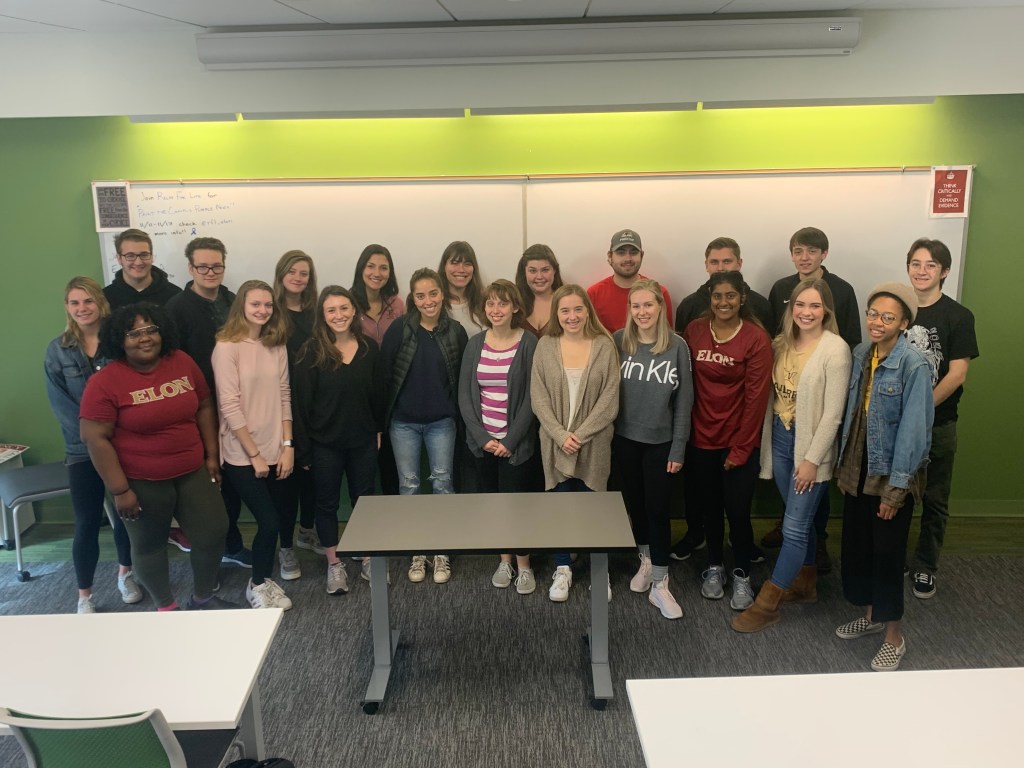
The 21 student journalists were divided into seven teams of three reporters each. They visited truck stops and a state rest stop along a 15-mile stretch of Interstate 40/85 in Alamance County, North Carolina, collecting the stories of travelers and truckers passing through the Piedmont region of the state. The students did the interviews, took the photos, and wrote the stories as news staffers. The professor served as editor and publisher. Any comments should be sent to ahatcher@elon.edu.

These student reporters fanned out to gas stations, truck stops, and roadside rest areas to interview truckers, vacationers, commuters, employees, and others to get their stories. Bylines are above each of the story sections and in the photo credits. Photo by Anthony Hatcher with an iPhone X borrowed from a student.